Buster Keaton and the Art of Visual Comedy
Buster Keaton’s visual comedy depends on space, objects and precise audience knowledge. Explore Sherlock Jr. and The General beyond the familiar expressionless face.
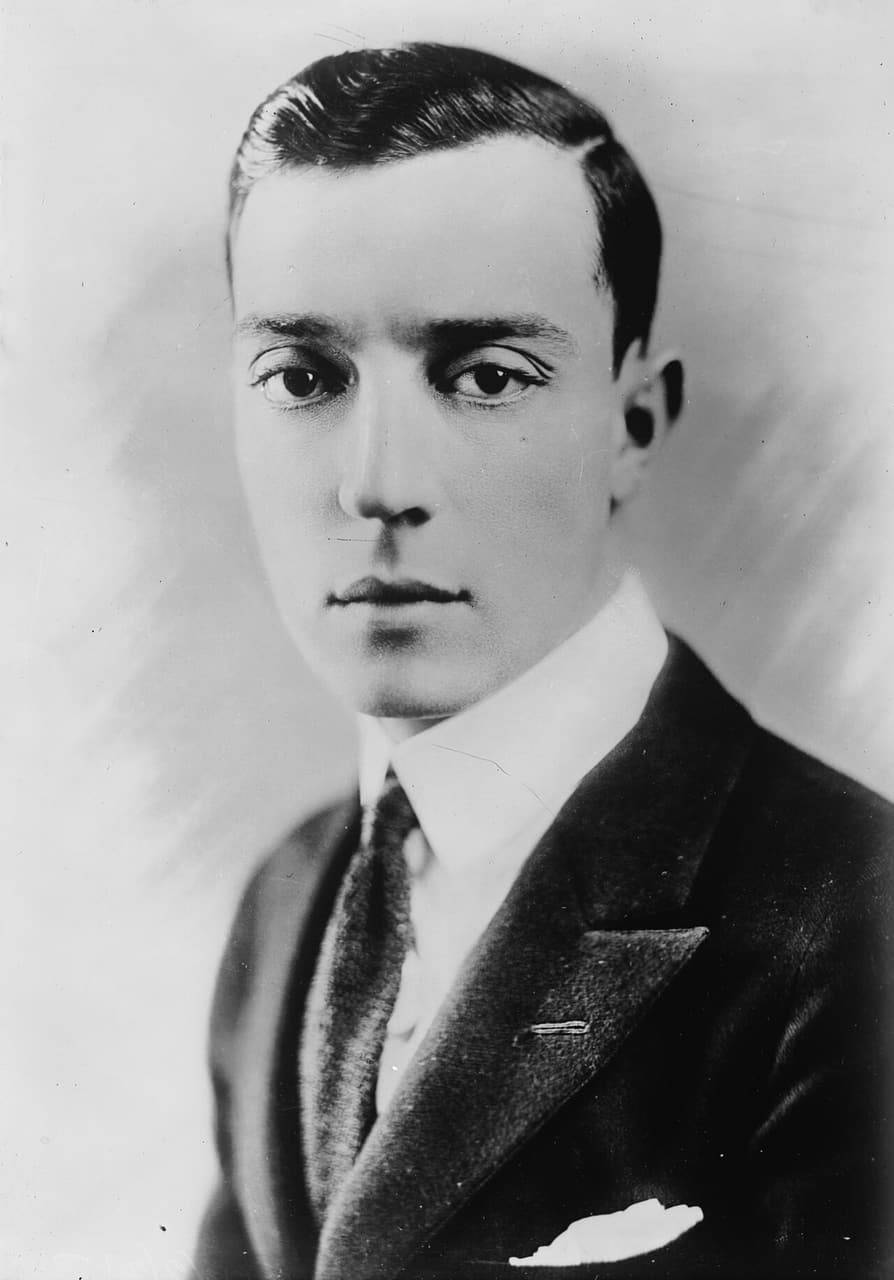
Buster Keaton's face is one of cinema's most recognizable images, but the apparent stillness of that face can distract from the activity around it. His visual comedy often gives the audience a clear view of a problem, an object and a changing physical relationship. The expression is one element within a carefully arranged scene. Follow the space as closely as the performer, and the work becomes much more than a reputation for remaining unsmiling.
Begin with the geography of the scene
Before a physical joke can surprise the audience, the audience usually needs to understand enough of the space. A doorway, a track, an obstacle or a moving vehicle establishes possibilities. The effect depends partly on knowing what could happen and where the character stands in relation to it.
When watching, identify the useful landmarks. Notice what the camera allows you to see before the action develops. A wider view can make a relationship legible without an explanatory speech. The comedy then grows from a change in that relationship rather than a disconnected event that simply happens to the performer.
An ordinary object can become a system
A mechanical object has parts and predictable movements. Those properties create opportunities for a gag because the viewer can understand a cause and anticipate a consequence. The performer may exploit the mechanism, misunderstand it or find that a solution introduces a new difficulty. The object's operation becomes part of the storytelling.
Do not reduce this to the idea that the more dangerous a prop appears, the better the scene must be. Small actions can be precise and revealing too. A brief adjustment, a delayed reaction or a relationship between two simple objects can carry a clear comic idea. Scale is one resource, not the whole art.
Sherlock Jr. makes the medium part of the play
The BFI dates Sherlock Jr. to 1924 and identifies Keaton as director and star. Its account describes a would-be detective imagining himself within a movie adventure, with film effects and stage-derived methods contributing to the result. The subject is therefore not only a character solving a problem; cinema itself becomes part of the premise.
That opens an enjoyable viewing question: what can happen because this is a film rather than a live room? A change of setting, a cut or an apparent impossible transition can become the source of a joke. The audience's knowledge of images and continuity participates in the action alongside the character's physical behavior.
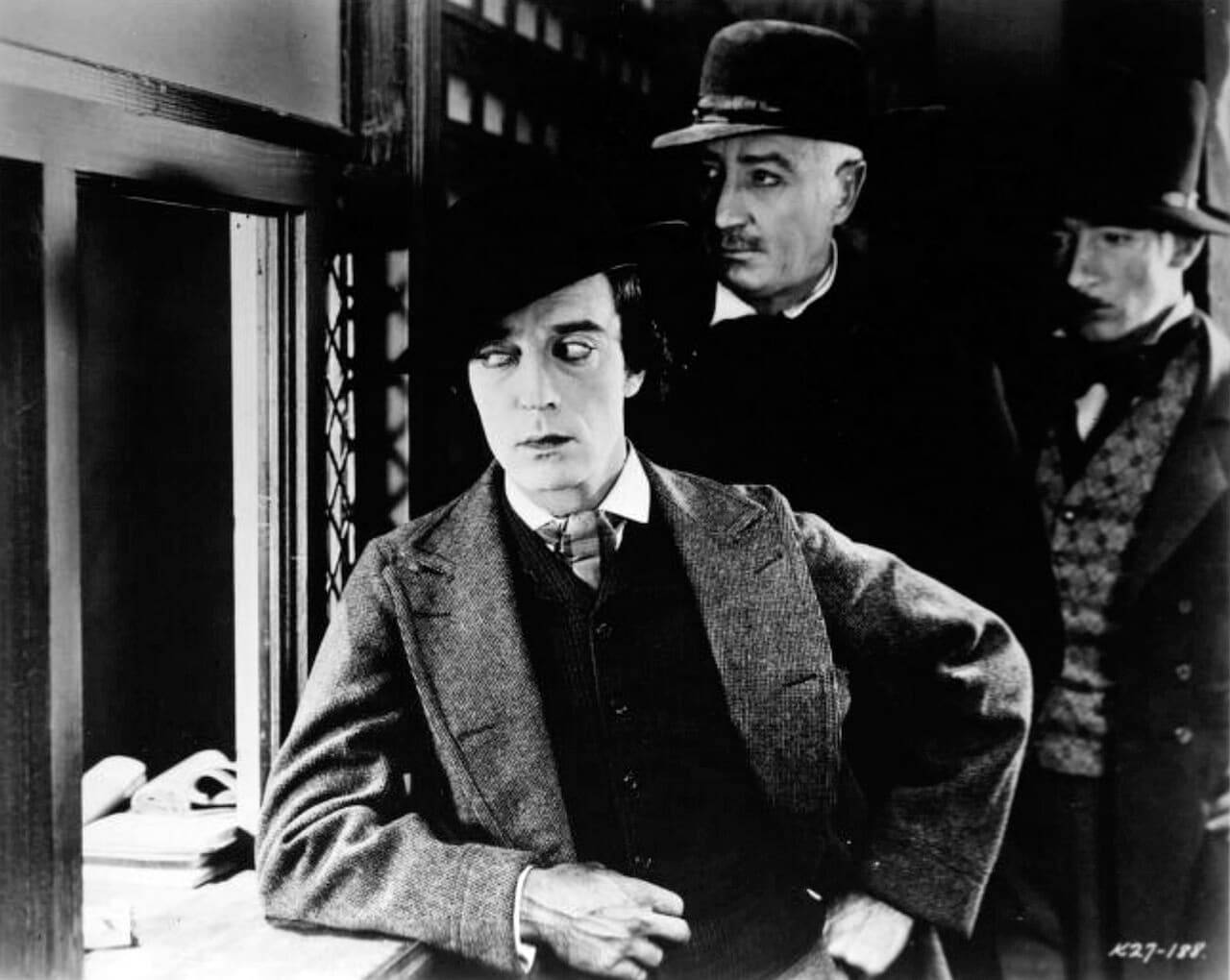
The General expands the physical setting
The BFI's record identifies The General as a 1926 film directed by Keaton and Clyde Bruckman, with a railway pursuit rooted in a Civil War incident. Trains provide moving spaces, tracks, obstacles and machinery. Those elements make the physical world especially important to the construction of a sequence.
The historical setting also deserves context rather than being treated as neutral scenery. The film's chosen perspective belongs to its dramatic construction and period of production. Appreciating the visual craft does not require overlooking the larger history represented or assuming a comic narrative is a complete account of the event on which it draws.
A successful stunt is also a production achievement
The BFI's discussion of silent-era action identifies technical and collaborative work behind major sequences, including the scale of the railway production. A finished scene can conceal planning, equipment and the contributions of other specialists. The screen image should not automatically become a claim that one person did every part of the job alone.
Nor should it become an invitation to imitate the action. Historical stunts involved serious risk and conditions a viewer cannot assess from the finished film. The appropriate response is to study the construction, credits and reliable production history, leaving hazardous reenactments out of the appreciation.
The face works in relation to the surrounding action
Keaton's restrained expression can allow the situation to carry much of the visible drama. The character continues dealing with a problem while the audience recognizes its scale or absurdity. The effect depends on a relationship between performance and context, not simply a rule that comedy requires no facial movement.
Try covering the reputation with a more specific question: what is this character doing now? Watch posture, pace, attention and the timing of a response. A familiar label such as stone-faced is an introduction, but it can hide the range of information conveyed through the rest of the body and the scene.
Compare individual scenes rather than whole reputations
Keaton and Charlie Chaplin are often placed in opposition through a few adjectives. A more useful comparison begins with particular sequences. How is the objective established? What does the viewer know? How do objects and other performers contribute? Those questions reveal differences without requiring a simplistic contest.
Use a lawful, well-presented version where possible, and read notes about the edition or accompaniment. Silent-era films reach modern viewers through histories of preservation and presentation. A poor copy or unsuitable playback can affect the experience without defining the original work's possibilities.
Keaton's visual comedy rewards a second look because its apparent simplicity rests on precise relationships. Space, objects, camera choices and a controlled performance make the action readable. The familiar face remains memorable, but the world arranged around it explains much of why the scene works.