Why Mangroves Matter at the Edge of Land and Sea
Mangrove forests connect tidal water, roots, wildlife and carbon-rich soils. Learn how these coastal habitats work and why protecting a functioning forest is more than planting trees.
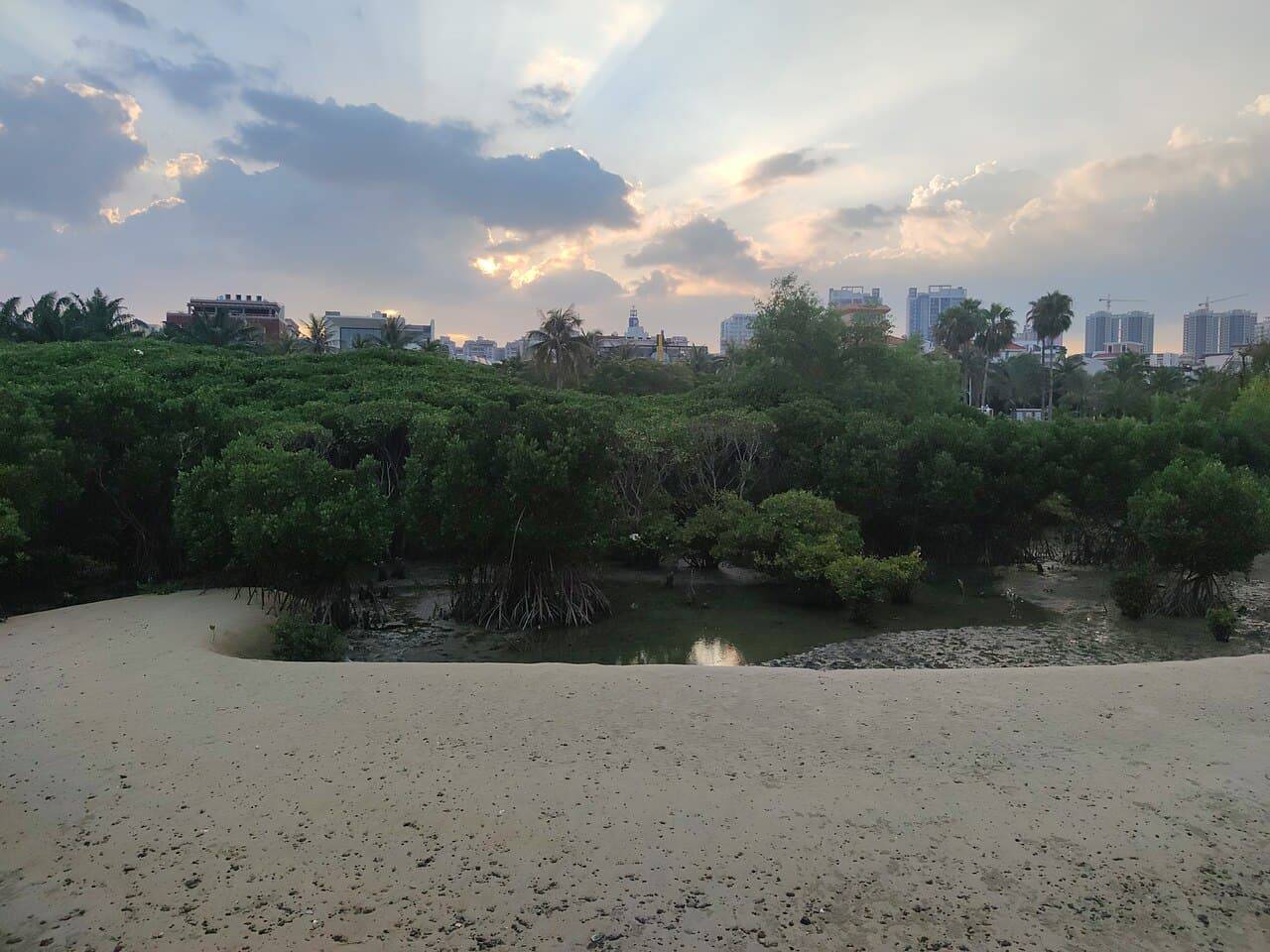
A mangrove shoreline can look like a forest balanced between two worlds. Water moves among roots, exposed mud changes with the tide and small spaces provide shelter for organisms that would be difficult to see from an open beach. The tangled appearance is part of the habitat's function. Mangroves connect living trees with water movement, sediment and the wider coastal environment, making the whole system more important than a count of trunks.
Mangrove describes a coastal group, not one tree
NOAA describes mangroves as trees and shrubs of the coastal intertidal zone, primarily in tropical and subtropical regions. Different species have different adaptations and forms. The familiar image of tall prop roots represents one conspicuous arrangement rather than the appearance of every mangrove species.
Start with the habitat's conditions: changing water levels, waterlogged soils and salt exposure. A tree growing there faces a different set of challenges from a tree on a well-drained inland slope. The interest lies in the ways particular plants cope with those conditions, not in imagining the coast as an ordinary forest with a little extra water.
Roots solve several practical problems
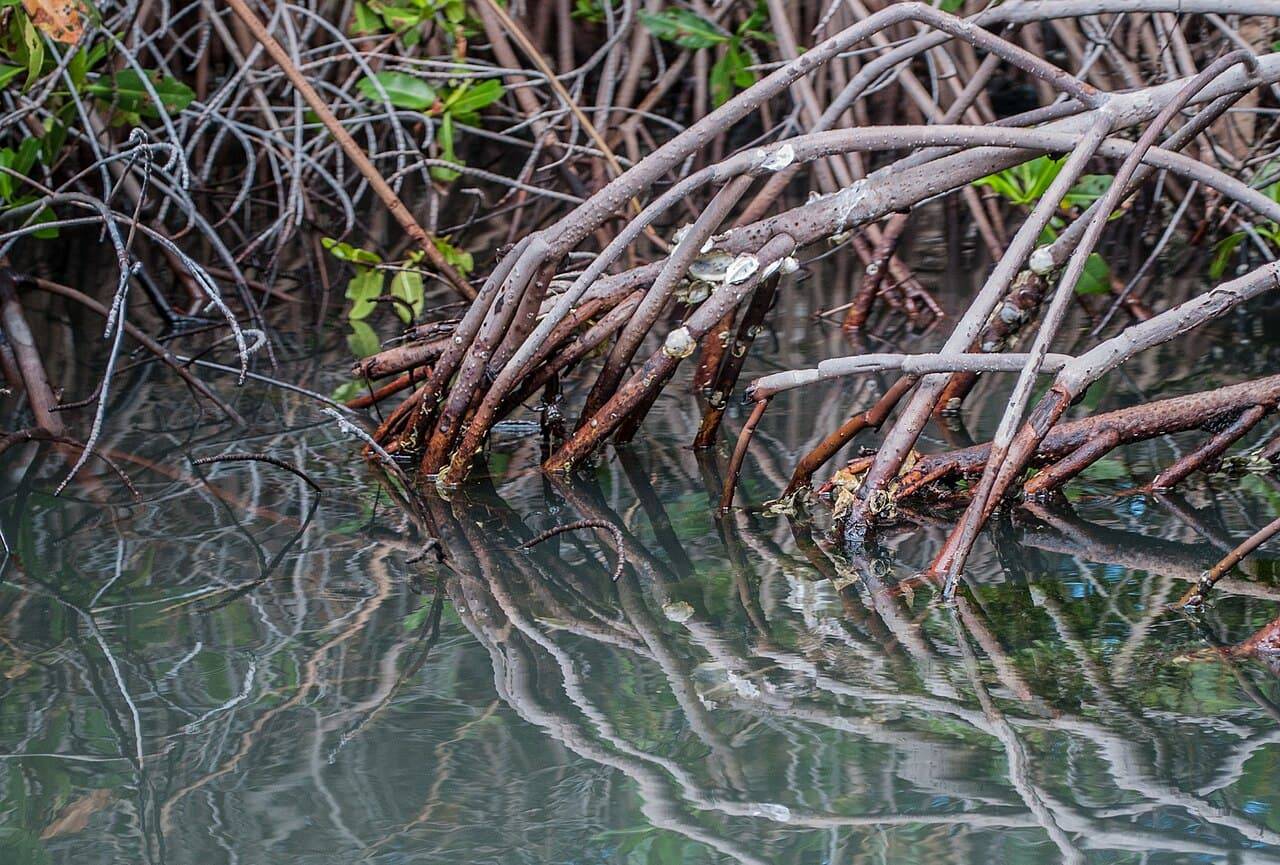
NOAA's estuary material explains adaptations associated with low-oxygen soils, salt and tidal conditions. Some mangroves have aerial structures that help with gas exchange, while prop or stilt roots are prominent in others. Salt handling also differs among species. A single root photograph cannot demonstrate every adaptation across the group.
That variation is useful to notice on a guided visit or in a reliable identification resource. Ask which species is being shown and what the particular structure does. A clear label makes the image more informative than the broad claim that all mangroves have the same unusual roots for the same reason.
The roots affect moving water and sediment
A dense root system can slow water movement and help sediment settle. NOAA connects mangrove forests with shoreline stabilization and reduced erosion. These effects emerge from the relationship between vegetation and the physical setting, not from a magical barrier that stops every wave or eliminates every coastal hazard.
The distinction matters when the habitat is discussed as protection. A functioning forest can contribute to coastal resilience while conditions still vary by site, storm and surrounding geography. Avoid converting a general benefit into a promise that one strip of trees makes every building safe. Ecological function and site-specific risk assessment are different questions.
Small spaces create opportunities for wildlife
Roots, water and sediment provide a complex environment. NOAA highlights food and shelter for fish and other organisms within mangrove systems. The structure matters: a tangle of narrow spaces differs from open water, and the organisms using it can connect the forest to neighboring habitats.
Watch from an appropriate path, boardwalk or permitted boat route without disturbing the roots or wildlife. The smallest visible movement may be more revealing than a search for one large animal. A quiet view of water around roots can show how much habitat is contained within what first appears to be an impenetrable edge.
Carbon storage includes the soil
Mangroves are part of the coastal blue-carbon discussion alongside habitats such as salt marshes and seagrass beds. NOAA distinguishes carbon sequestration, the rate of uptake, from carbon storage, the accumulated amount retained. Much of the stored carbon in these coastal systems is associated with soil and sediment rather than only visible branches and leaves.
That distinction explains why counting trees is not enough to describe the system. A damaged soil environment can matter even when some vegetation remains. Likewise, a newly planted seedling is not instantly equivalent to a mature functioning habitat with its accumulated structure and material. Different measures answer different questions.
Restoration is more than placing seedlings
A coastal habitat depends on water movement, elevation, species and surrounding land use. A planting photograph can show one activity without establishing the long-term result. When reading about a project, look for information about the site, appropriate species, survival and monitoring rather than treating the initial number planted as the complete outcome.
This is a general way to assess habitat claims, not a prescription for managing a particular coast. Restoration requires local ecological expertise and appropriate authority. Unplanned planting or changing water flow can create problems, so participation should follow a credible site's guidance rather than an improvised attempt to improve the environment.
Visit with the whole habitat in mind
Notice the water level, the exposed roots, the ground and the connection to nearby open water. The scene may change substantially with the tide. Photographs from different times can therefore look inconsistent without showing damage or recovery. Context is essential before drawing a conclusion from an apparent change.
The same habit helps explain coral reefs, where living organisms and the structure they create are closely connected. In both cases, the visible form is part of a broader system. The most useful account links that form to the physical and biological relationships around it.
Mangroves matter because trees, roots, sediment and tidal water work together. Their coastal role includes habitat, physical effects and carbon storage, with details that differ by place and species. Look beyond the tangled outline and the shoreline becomes a record of many interacting processes rather than a simple row of trees at the sea's edge.