What Causes the Northern Lights?
The northern lights arise when energetic particles interact with gases high in Earth’s atmosphere. Explore auroral colors, magnetic context and the difference between a forecast and a guaranteed view.
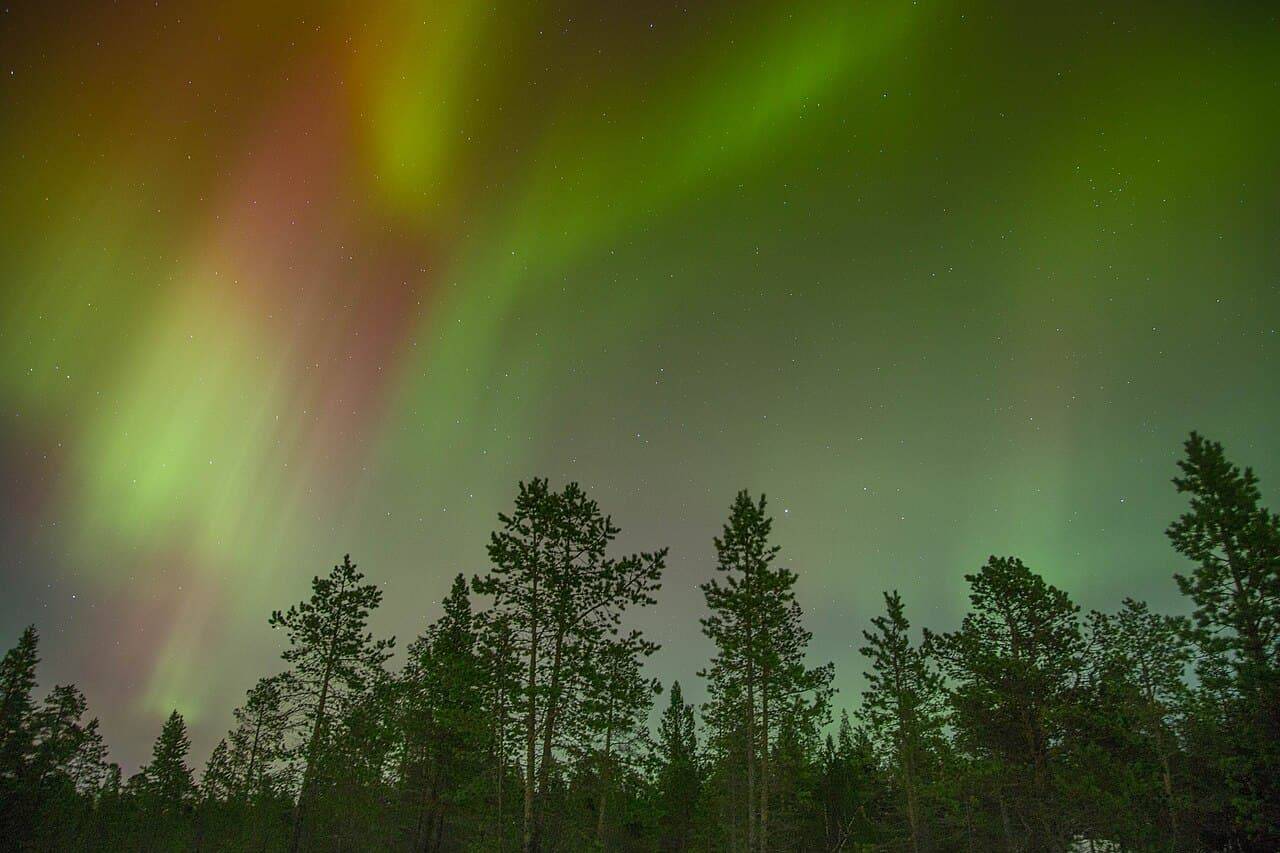
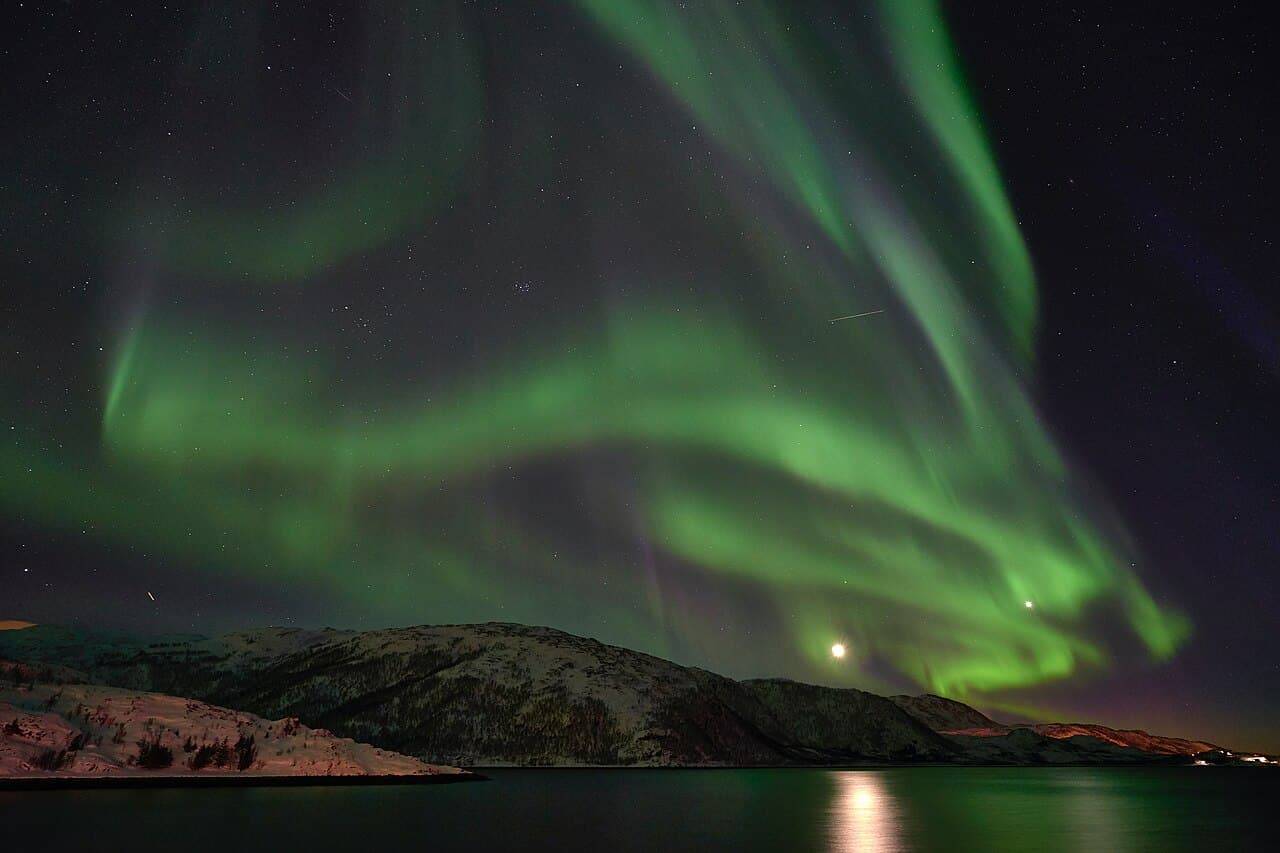
The northern lights can look like a curtain, a pale arc or a moving structure of green, red and purple. Their beauty belongs to a physical relationship between the Sun, Earth's magnetic environment and gases high in the atmosphere. The light is not a reflection from ice or a colored cloud lit from below. It is produced when energetic particles transfer energy to atmospheric atoms and molecules, which then emit light.
The atmosphere is where the visible glow occurs
NASA describes auroras as part of the Sun–Earth system and the broader subject of space weather. Energy and particles interact with Earth's magnetic environment, and particles reaching the upper atmosphere can excite its gases. The resulting emissions create the display observed from the ground or from space.
Keep the source of the energy and the location of the light separate. A connection to solar activity does not mean the visible curtain is on the Sun or between ordinary low clouds. The atmosphere provides the material that glows. That distinction helps explain both the colors and the relationship between the display and the observer's location.
Different gases contribute different colors
NASA identifies oxygen with common green and red auroral emissions and nitrogen with blue and pink-related colors. The precise appearance depends on the gas, altitude and energy involved. A display's palette therefore contains physical information rather than being an arbitrary decorative effect.
The color categories are useful without becoming a perfect field test for every photograph. Images can combine emissions, and camera settings and processing affect the result. A single patch of color on a screen should not be used to infer an exact altitude without the appropriate measurements. The general explanation and a detailed scientific determination are different levels of claim.
Magnetic geography matters
Auroras are strongly associated with high-latitude regions, but geographic latitude alone does not tell the whole story. Earth's magnetic field shapes where particle interactions are likely to produce a visible display. During stronger geomagnetic activity, opportunities can extend to places that do not commonly see auroras.
This is why an aurora forecast uses more information than a list of northern destinations. A location famous for the lights may still have no view on a particular night, while an unusual event can draw attention much farther away. Use current official information rather than assuming a place name guarantees the experience.
Darkness and weather remain ordinary constraints
Even if the space-weather conditions are favorable, clouds and bright surroundings can prevent a satisfying view. The physical display and your ability to see it are related but distinct. A forecast can describe the former without removing the practical limits of the latter.
Choose a safe, permitted location with a suitable horizon and account for the weather on the ground. Do not drive while searching the sky or stop in an unsafe roadside position. A clear forecast is not permission to ignore cold, terrain or travel conditions. The outing needs an ordinary safety plan as well as an astronomical interest.
A forecast is a probability guide
NOAA's Space Weather Prediction Center provides a short-term aurora product with an explanation of what the display represents. Read that explanation, the update time and any limitations. A colored region on a map is not a reservation for a guaranteed show above one particular house.
Forecasts can change as conditions develop. If planning an outing, check current information and local weather rather than saving a screenshot and treating it as permanent. The useful role of the forecast is to support a decision under uncertainty, not to remove uncertainty altogether.
A camera and an eye can record different experiences
NASA's photographing guidance discusses how cameras can reveal color and detail differently from unaided viewing. An exposure can collect light over time, while processing changes the displayed result. A vivid photograph may therefore be a faithful record of captured light without matching exactly what a person perceived in one instant.
When comparing your view with an image, look for exposure information and context. Do not assume a faint personal experience means the event was false or that a photograph proves the sky looked identical to every witness. The observer, instrument and final display each contribute to the appearance.
Let observation come before image-making
If a display is visible, spend some time simply watching its shape and movement. You may notice changes that a sequence of hurried camera adjustments would hide. If photographing, prepare the equipment safely and use a stable setup suited to the location. A simple record is enough if the main goal is remembering the outing.
The same instrument-awareness helps when looking at Hubble and Webb images. Different detectors and display choices can reveal information unavailable to ordinary sight. Understanding the method makes an image more interesting rather than less impressive.
The northern lights connect energetic particles, atmospheric gases and magnetism in a visible display. Color and movement invite wonder, while forecasts and captions provide context. Keep the physical event, the viewing conditions and the camera's contribution distinct, and both the science and the experience become easier to appreciate.