Why Stars Twinkle—and Why Planets Usually Look Steadier
Understand how moving air distorts starlight, why planets often appear steadier and why twinkling alone is an imperfect way to identify a light in the sky.
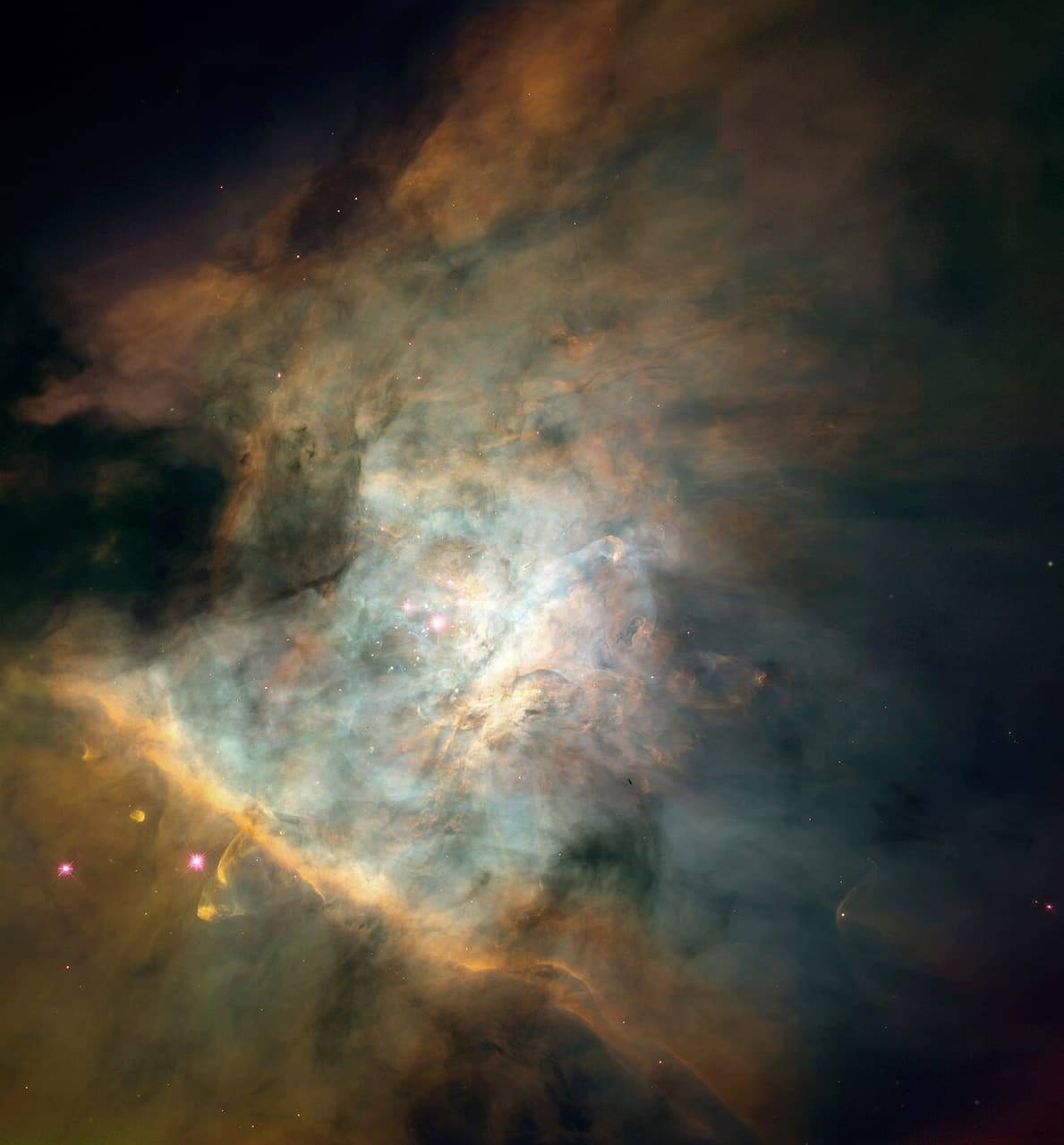
Stars appear to twinkle because their light passes through moving, uneven air before reaching your eyes. The atmosphere changes the path of that light, producing rapid apparent variations. The star is not repeatedly switching itself on and off to make the familiar sparkle. Planets often look steadier, but that difference is a clue rather than an infallible identification test.
The light changes on the final part of its journey
NASA’s explanation describes an atmosphere that is constantly changing. Different pockets of air bend incoming light differently, and their motion changes the effect from moment to moment. Astronomers call the resulting apparent fluctuation scintillation. You can recognise the everyday appearance without needing to calculate each bending ray.
This separates two kinds of variability. A star can have genuine physical changes in brightness, but the rapid twinkle seen during an ordinary look from the ground is mainly an atmospheric effect. A momentary colour flash or shimmer is not sufficient evidence that the star itself has suddenly changed temperature.
Why a planet can look more stable
In its skywatching guidance, NASA explains that distant stars behave like tiny points of light for this purpose, while planets present small apparent disks. Variations across different parts of a planet’s disk can average out more than they do for a point-like star. That is why a planet commonly looks steadier to the unaided eye.
Do not turn “commonly” into “always.” Viewing conditions matter, and a bright light close to the horizon can shimmer noticeably. A short glance from a window is also affected by the local viewing arrangement. The useful comparison is a tendency under suitable conditions, not a permanent rule separating every possible observation.
Try a comparison without guessing the object
First use a reliable current sky chart to identify a bright star and, when available, a planet visible from your location. Choose a safe place with a clear view and keep artificial lights out of your immediate line of sight where practical. Do not aim optical equipment near the Sun; this comparison belongs in a suitably dark sky.
Look at each object briefly, then describe what actually changes. Does brightness seem steady or flickering? Is one object much lower than the other? Is the sky clear or hazy? The purpose is to compare conditions, not to force the two objects to demonstrate a textbook pattern on demand.
| Note | Why it helps |
|---|---|
| Approximate time and place | Makes the observation interpretable later. |
| Object identified from a chart | Avoids using twinkling as both the test and the conclusion. |
| Position above the horizon | Keeps a major difference in viewing geometry visible. |
| Description of the apparent flicker | Preserves what you saw without inventing a measurement. |
Why the same atmosphere challenges telescopes
The distortion is not just a curiosity for naked-eye observers. It can blur fine detail in ground-based astronomical images. A telescope above most of the atmosphere avoids that particular source of distortion. ESA’s astronaut video illustrates the steadier view from above the air responsible for ordinary twinkling.
Our explanation of Hubble and Webb explores another distinction: instruments also differ in the wavelengths they observe. Removing atmospheric distortion and choosing a wavelength range are separate design questions. A sharp space image is the result of an observing system, not simply a larger version of your own view.
Use more than one clue for a mystery light
For identification, combine position, timing, motion and a reliable sky chart. A satellite or aircraft can look bright without behaving like a fixed star. A planet can shimmer without becoming a star. If the evidence remains incomplete, write down the uncertainty instead of naming the object from one visual trait.
The pleasure of the comparison is that a familiar night sky reveals the air around you as well as distant objects. Twinkling says something about the route the light has taken. Once that distinction is clear, a steadier planet and a sparkling star become two observations to investigate, rather than a rule that must fit every night.